Translate

Thursday, March 14, 2013

Why do I read? What do I read?

     Why do I read?

     I try to ask myself that question, and only supply one answer. However, I've had so many positive experiences with reading that I just can't provide one simple response. In grade school, I was crazy about reading. I had so many positive experiences that encouraged me to read on my spare time. For example, in elementary school, every Friday my mother would visit for "Fun Friday Reading." I can still remember that I would look forward to every Friday afternoon for reading. I was allowed to curl up in a corner, and whisper to my Mother as I read. Also, my teachers filled the classroom with several age appropriate novels that drew my attention. I would love to read Goosebumps, The Magic Tree House, and several mystery novels. All of these novels attracted my attention. I enjoyed reading because it was exciting and unpredictable. My favorite genre was and still is mystery, because there is always a turn in events. 
     Currently, as a college junior, I still enjoy to read on my spare time. However, my reasons for reading differ from my reasons from my childhood. For example, now I enjoy reading because I like to learn new vocabulary. As humans, I do believe that we are "sponges," and I believe that we should absorb as much knowledge as humanly possible. Reading not only allows me to extend my vocabulary, but it has also improved my grammar and pronunciation. For me, reading is relaxing and educational at the same time. So, I thoroughly enjoy it in my spare time, and I constantly encourage my peers to read as well.

     What do I read?
     Well, typically I enjoy reading any novel that falls in the genre of mystery. I typically enjoy the genre of mystery because the events are always unpredictable. I find myself more intrigued and determined to solve the "crime" in a novel. Some of my favorite mystery novels include Eye of the Needle by Ken Follett, and The Choirboys by Joseph Wambaugh. These novels absolutely blew my mind away. I read both books in a span of four days. I couldn't help myself.
      Also, I do enjoy reading historical novels. One of our greatest senses as humans is the ability to see. I enjoy viewing old photographs that relate to a person's history. These photographs could range from sixty years ago to two hundred years ago. Furthermore, I enjoy pictures of famous historical leaders that have had an impact on our society, such as President Abe Lincoln. I find many historical novels that include pictures of these figures. I find it so fascinating to not only view these historical images, but also read about these images. Overall, reading is one of my favorite hobbies. As a future teacher, I will strongly encourage my students to read on their spare time, and to enjoy reading as much as I do.

Thursday, March 7, 2013

Picture Books Contribute to a Child's Learning


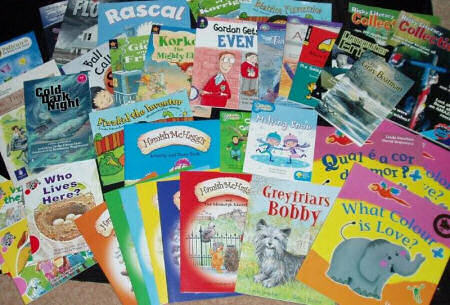
     Currently, in EDU 307, our class is working on a paper and a short story for Reader's workshop. One of categories, in which we can write our stories in relation to, are picture books. Pictures books are a great way for students to develop social study concepts. An article written by Pamela J. Farris and Carol J. Fuhler, "Developing social studies concepts through picture books," explains how picture books are important to a child's learning. Unfortunately, picture books are relied on for teachers who have a classroom of young students. Picture books typically aren't use for older children. However, picture books can easily help a child develop social study concepts.
     Images are useful for young children's education because they are able to picture the scenario in their own minds. The article states, "First, they can add depth to a specific topic by providing detailed information that is often missing from textbooks." Picture books allow children to explore their imaginations. When they are able to see images, they are able to gain a better knowledge of an event, instead of just reading about that event in a text book.
 Furthermore, the article states, "Second, picture books also lend themselves to presenting sometimes difficult or sensitive concepts to children in a palatable manner." For example, a book about a man who was enslaved, can be easily presented to children. Along with addressing slavery, picture books can create images of characters, settings, and even inventions that were created by men such as Elijah McCoy. This way, the students are being educated on all aspects of a person's life in an educational and interesting manner.

     This article contains several other points that highlight the importance of using picture books when teaching. In my own classroom, I would definitely include picture books for my students to use. During at least one literacy block per week, I would have my students only choose from picture books. I think picture books are important to a student's learning because these books use images to represent text. Also, I think that picture books help students explore their imaginations. Overall, picture books should be included in every teacher's classroom to help children learn.
   

Monday, March 4, 2013

What is Literacy to a Preschooler?

     An interesting article written by John T. Guthrie, "Preschool literacy learning," fascinated me for many reasons. After reading this article, I realized that at young ages, children are able to identify certain aspects of literacy. By the time that many children reach first grade, they are able to make the connection between a book and its use for reading. Guthrie states, "One-half or more of these preschool children knew that 'a book is to read.'" As I reader further on in this article, I was fascinated to learn that the majority of these children were able to identify the front of the book, and some of the children were able to identify pictures in the book. Where do these capabilities come from? I asked the same question, and just had to read on....

     Catherine Snow wrote in the Harvard Educational Review, reported a study of a child between the age of 18 and 36 months. It was interesting to read about Snow's report because she stated several connections between different aspects of a child's learning. Guthrie states, "Snow's thesis was that learning to speak and learning to read at home have significant parallels." Just like the ability to speak, the ability to read is a process that needs to be learned. Guthrie's article goes on to explain more of Snow's interesting facts. There are several ways to teach a child important aspects of literacy. As proven, a young child is capable of understanding what a book is, what it is used for, and the different parts of the book, such as the front, back, and page. 
     I enjoyed reading this article because it stated several key terms. As a future teacher, I think it is important to become familiar with this vocabulary. For example, I wanted to recognize an important term in which Snow uses to defend her report, semantic contingency. The article states, "Drawn from language acquisition research, the term semantic contingency refers to the occurrence in which the adult continues a topic introduced by the child, or adds new information to a statement made by the child, or answers questions posed by the child." So, in reality, it is important for a parent to further develop their child's knowledge on literacy. For example, if a child identifies that there are two separate pages of a book, it is important to show the child that if they flip the page, there just so happens to be more pages of that book. It's little actions, such as the example I just stated, that can further develop a young child's basic understanding of literacy. As a future teacher, I think it is important for children to learn about literacy at a young age. Most importantly, literacy will always be incorporated into the student's learning. So, why not encourage this knowledge of literacy from a young age?

Thursday, February 28, 2013

Isolate Each Component of Literacy

     In order for students to become exceptional learners in both reading and writing, the learning process needs to be divided into several parts. It is important for students to learn literacy, in which daily lessons are focused. This way, students can take each component of literacy and develop clear connections to each other. In relation to Debbie Rickards and Shirl Hawes' article, "Connecting Reading and Writing Through Author's Craft" discusses, "Classroom teachers can link the isolated components of balanced literacy by helping students make focused connections in reading and writing through out the day" (370). As a future teacher, I think it's important to develop lessons that have specific objectives and goals. Furthermore, I think it's important for lessons to connect and relate to one another. Learning how to become a better reader and writer is a step by step process. In previous fieldwork, I noticed that students became more distracted during  the literacy block when they were overwhelmed with tasks. However, when the students were asked to do one specific assignment, such as to underline the main ideas in a story, they were focused and able to complete the work.
     Rickards and Hawes' article states four points in relation to the focus on one strategy across literacy components. The four points are:

  • set a purpose for listening and reading;
  • use exemplar texts to affect specific parts of their own writing;
  • begin to read like writers; and
  • realize that certain concepts are in the repertoire of all good writers. 
     This article includes several in-class activities that could help break down the components of literacy so that students can gain a better understanding. One example from this article included Ms. Tran's lesson, in which the students worked together to replace verbs to fix the way a character sounds in the story. The students located the verbs, and developed ideas together as a class. For example, Ms. Tran demonstrated to her students that a character's sound could be expressed by replacing the verb "said" with "shouted." As a future teacher, I find small lessons such as Ms. Tran's to be effective. Even as a current college student, it is easier for me to store knowledge when lectures are broken down, and each lesson can be connected to the overall topic. I would like to incorporate mini-lessons or focused lessons into my classroom's literacy block. I want my students to become better readers and writers, and to enjoy the process of reading and writing. I personally believe that focused lessons that connect to literacy as a whole is the most effective way to go.

Monday, February 25, 2013

Classroom Management

     There are several factors that contribute to classroom management. In particular, organization is the key to a successful classroom. I believe that organization is highly important in any educational atmosphere. A classroom can quickly become chaotic if there is an absence of structure. I would like to organize my classroom in a similar manner that related to a classroom that I previous completed fieldwork in. This classroom contained organization and structure for almost every classroom activity. For example, the teacher followed a strict time limit, and consistently notified her students of the day's continuous schedule. For example, she made a large chart that listed the times of the day, and the activities that would be completed during that time. This way, students were fully aware of what subject area that would transition into. Also, this keeps the students on task, because they are fully aware of what work/activities need to be completed at that time. Furthermore, the teacher made a poster that listed all of the tasks that need to be completed at the end of the day. The end of the day poster reminded students of their obligations, and for the most part, prevented chaos from developing.

     In relation to classroom management, I think it's important to also incorporate a sense of responsibility within my classroom. Responsibility needs to be instilled in students because it will benefit them in the future. My previous fieldwork teacher used several strategies to incorporate responsibility into the classroom. In particular, she came up with a clever idea to assign classroom jobs to each student. The teacher used small, laminated shapes that were labeled with a task such as "paper passer" and "homework collector." The teacher wrote each of her student's names on each of the shapes, and everyday the students had a new job. I think it's important for students to have a sense of responsibility because it creates a community within the classroom.

     Finally, I think the most important idea that I have in relation to classroom management is to incorporate activities into the classroom that make it feel like a community. In EDU 414, the required text book, Child Development and Education, McDevitt and Ormrod discuss the idea having the classroom be a "community of learners." The text states, In one model, children form a community of learners, a classroom arrangement in which students help one another to achieve a common learning goal" (572). Treating the classroom similar to a community encourages participation, socializing, and comfort ability for the students. I want my students to connect to one another and be able to successfully work with one another in groups. Overall, I think that these three main aspects are most important in my future classroom.

Thursday, February 21, 2013

Writing About Writing

     Chapter three in Grove's book, 'Why Would Anyone Ever Want to Write?', contained some interesting and truthful information in relation to students and the development of writing. This chapter highlighted the importance of instilling writing skills early within a child's education. Also, this chapter discussed the importance of making writing fun and a non-stressful experience for students. The goal is to encourage students to perform writing, rather than feel like writing is, "a sweaty business." Writing can/is a scary experience to new students. It's important to me, as a future teacher, for my students to feel comfortable within their own learning environment. I want to help my students develop writing skills at an early age, and I want my students to leave my classroom with a feeling of accomplishment in relation to the ability to write.
     Chapter three listed several strategies that could improve student's writing skills. Some of these in-classroom activities included, writing a letter to a family member, writing about their day, recording their thoughts in a journal, and even writing about the atmosphere that surrounds them. I wanted to give recognition to this part of the chapter because it provided several fun and easy activities that could encourage student writing. Also, I was able to picture my own classroom, and think about which of these activities I would include. I have concluded that I would like to use each of the activities that I have listed from the text. For example, writing a letter to a family member is a phenomenal idea. Not only does it encourage student writing, it's sentimental, it develops structure for letter writing, and it sure does beat writing a uninteresting prompt. Furthermore, even recording their thoughts into a journal is sentimental. It allows the students to connect with their emotions, and to write their feelings down on a piece of paper. I think that it is important for my future students to understand that writing is meaningful and useful in several ways. It should be performed in every day life.
    As for the classroom structure, I think it's important to include writing in several subject areas other than in Language Arts. For example, the students should be given activities in science and math, in which they have to describe data. This also practices writing skills. When I was in Elementary School, I remember that my teachers gave me several assignments that linked to writing in one way or another. By doing this, it practices repetition with writing. It reminds me of a child learning how to ride a bike. When a child begins to ride a bike, the first few times they tend to fall off the bike. However, with consistent practice, the child is able to ride a bike without falling off. That's similar to the develop of writing skills. If a child continues to have in-classroom activities that involve writing, they are more likely to lose that fear that has been instilled, and will be more likely to enjoy it. Overall, writing skills are important to a student's learning. Students should always be encouraged to write, even if it's as simple as writing a reflection of their day.
   

Friday, February 15, 2013

Collaborative Learning: Does it support literacy within the classroom?

Collaborative learning is effective and supportive towards learning literacy skills. In previous fieldwork experiences, I have noticed that students enjoy working with others in small groups on the same activity. In particular, I used to observe and help small reading groups during the afternoon literacy block. I observed that the students enjoyed working with each other because they were able to share and compare their opinions, as well as help each other complete certain tasks. If a student was struggling with pronouncing a word, then another student would help by sounding out the word. Also, several times I observed students who had different interpretations of the readings. For example, from my fieldwork that I completed last semester, the students were reading 'The Three Little Pigs'. One student stated that she thought the first pig had died, and another student corrected her, and together they both looked back in the text. The other student explained to his group member that the first pig simply ran to another pig's house. The student was then able to understand the correct concept on the story. 
Furthermore, collaborative learning supports literacy because each student is motivated to complete their work. In other words, collaborative learning encourages socializing with other students, and provides the students with a sense of responsibility. I have found in previous fieldwork that students enjoy completing their work when every person is assigned a role, and they have the opportunity to work together. It develops a sense of leadership and responsibility. Also, some students are stronger in some aspects of literacy than others. Most times, student to student communication can clarify any confusion about literacy, such as the way a story was comprehended. Collaborative learning encourages the students to work together to complete activities.
Overall, I think collaborative learning is effective, and does indeed support literacy skills. There are several aspects of literacy that a teacher needs to focus on within the the literacy block. Having students work with others is an easier and more effective approach to learn this subject matter. As a future teacher, I certainly plan on including collaborative learning in several content areas, and especially include it in literacy. 

(Unfortunately, I couldn't incorporate text from the article, sense we weren't able to cover this information during class due to the snow storm.)